



7 Medical Sciences Trends Shaping Healthcare in 2026
2025 was a groundbreaking year for medical science. CRISPR gene-editing made the leap from lab to clinic, cancer immunotherapy discoveries earned the Nobel Prize, researchers made real strides toward reversing Alzheimer’s and healthcare leaders worldwide signed a global pandemic treaty.
Now, 2026 is already gearing up to take the torch. From personalized gene therapies to robot assistants, here are seven healthcare innovations to watch in the year ahead.
Medical Sciences Trends Transforming Healthcare in 2026
#1 Personalized Gene Therapies Enter Early Clinical Use
Gene therapy could soon let your doctor design treatments tailored to your DNA.
In mid-2025, Stanford researchers unveiled CRISPR-GPT, an AI “copilot” that can design CRISPR experiments in months rather than years, accelerating the speed at which therapies reach patients.
The same year, scientists administered the first fully personalized CRISPR treatment to a six-year-old child, dramatically reducing the child’s need for medication and proving that truly individualized medicine is within reach.
#2 Robots Assist in the Operating Room and Beyond
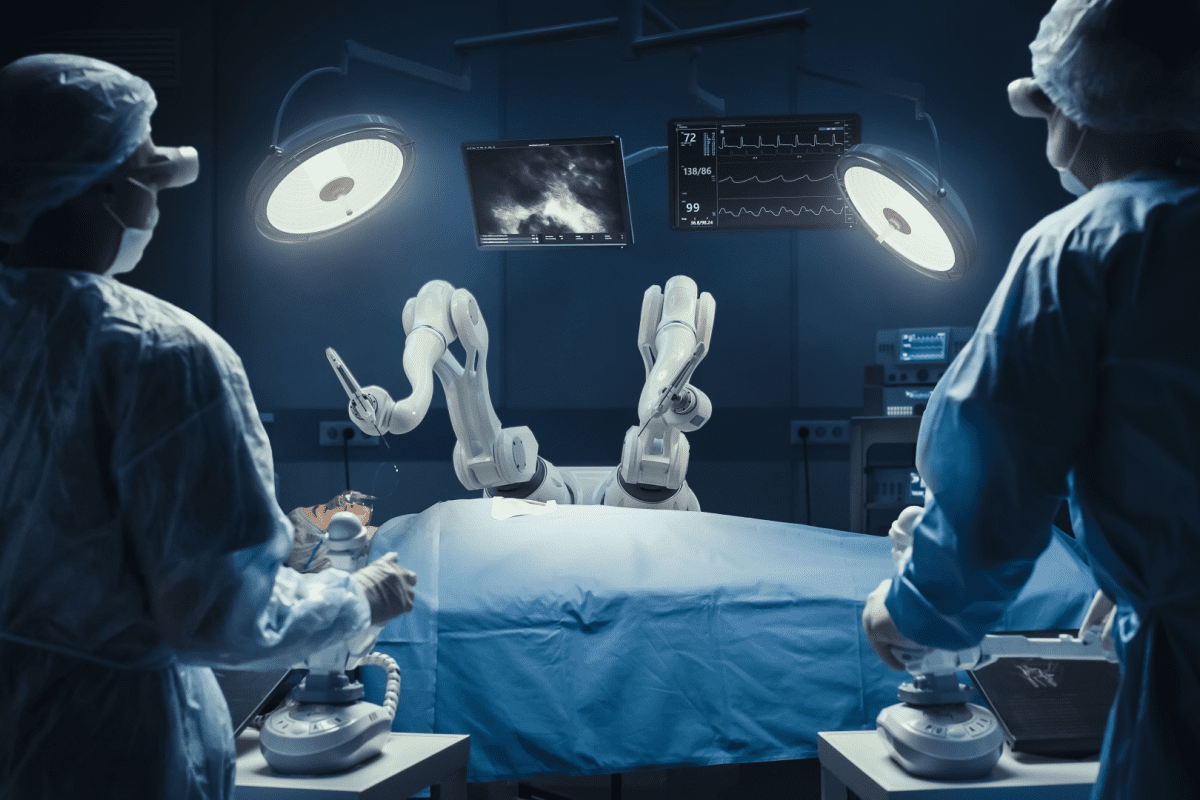
Picture this: Robotic assistants like Da Vinci helping surgeons in the operating room, while robotic hospital porters deliver equipment and medication down the halls. What once seemed futuristic is quickly becoming part of everyday hospital life.
Across the U.S., robots already handle routine tasks to ease workforce shortages. In countries like Japan and South Korea, caregiving robots are poised to step in to support aging populations within the next five to ten years.
Robots are here to stay, but experts are still studying their long-term impact on patient outcomes.
#3 Healthcare Becomes a Global Collaboration
The COVID-19 pandemic showed us that health threats don’t respect borders — and that we’re stronger together.
In 2025, world health professionals signed the WHO Pandemic Agreement, which aims to make global healthcare more prepared, accessible and equitable.
And we’re finally entering the era of the One Health movement, which acknowledges that humans, animals and the environment are interconnected: one shared ecosystem that rises or falls together.
What’s next for global healthcare:
- Next-generation, variant-matched COVID vaccines
- A global push to catch up on missed childhood immunizations (14 million children remain unvaccinated)
- Bacteriophage therapies to fight antibiotic resistance
- Development of pan-variant flu vaccines designed to outsmart mutations
#4 Virtual Hospitals Revolutionize Patient Care
For those who live far from a quality clinic, virtual consultations are an enormous help. You book an appointment just like you would for an in-person visit, then connect online to talk to a nurse or licensed provider through video or chat.
Telemedicine can handle everything from colds and skin issues to ongoing care for chronic conditions. But the newest model in accessible care is already here: In 2025, Saudi Arabia launched the world’s first fully virtual hospital, linking 130 clinics and treating up to 400,000 patients a year. Expect more countries to follow suit.
If you’ve been putting off that doctor’s visit, a more accessible alternative may soon be just a click away.
#5 AI Transforms Medical Diagnostics
An AI chatbot may be your future physician assistant — and a remarkably precise one.
In a 2025 study published in Nature, researchers trained an AI called EchoNext on over a million heart scans. The result? EchoNext outperformed cardiologists at detecting heart disease from electrocardiograms (ECGs). Here at UF Health, researchers collaborated with NVIDIA to create GatorTron, an AI designed to help doctors interpret complex clinical data and make faster decisions.
Add drug discovery to AI’s future duties: At MIT, researchers used generative AI to design new antibiotics that cured drug-resistant infections in mice. And quantum computing is helping healthcare providers see diseases up close, right down to the molecules.
As AI technology advances, regulators are modernizing clinical trials — adding tools like e-consent, remote monitoring and adaptive study designs. The goal is to make drug testing faster and safer … while still putting patients front and center.
#6 Precision Medicine Moves From Research to Real Life
Imagine walking into your doctor’s office and getting the exact dosage and treatment for your condition based on your genes — with few or no side effects. That’s precision medicine.
Personalized medicine has made huge technological advances in recent years. The FDA recently approved Guardant360 CDx, a blood test that helps doctors match patients to the right breast-cancer drug by spotting specific gene changes. A leading provider in cancer-screening tests also launched Cancerguard: a single blood test that can screen for more than 50 cancer types at once.
In 2026, expect more progress in:
- Ultra-precise testing, like liquid biopsies that detect diseases early
- Customized treatments based on your unique DNA
- Genetic risk scores that show how likely you are to develop certain conditions
- The future of care is medicine made just for you.
#7 Biotechnology Merges With Modern Medicine
What if you could grow a new heart from your own stem cells? Biotech is evolving fast and redefining what’s medically possible. 2026 could bring some of its most exciting breakthroughs yet, including:
- Organ regeneration
Scientists are working on ways to grow new organs using a patient’s own cells. - STEM cell technology
Regenerative medicine is exploring its use in repairing damaged heart tissue, treating genetic disorders and generating new tissue. - Bioprinting and tissue engineering
Custom-made 3D bioprinting and tissue engineering may soon provide anything from tissue transplants to artificial bladders.
Key Takeaways
Medicine is shifting from one-size-fits-all care to an era of personalization, speed and precision. Here’s what to remember:
- Innovation is everywhere, from AI-powered diagnostics and CRISPR gene editing to virtual care and regenerative biotechnology.
- 2026 is all about acceleration, with faster breakthroughs, intelligent systems and more equitable access to care.
- Global teamwork is the new standard, and health systems are joining forces to prepare for the next wave of global challenges.
Join the Next Generation of Medical Discovery
The next chapter in medicine is being written right now — and you could help write it.
Are you passionate about advancing medical sciences? Can you see yourself diagnosing with AI, assisting in robotic surgery or designing the next personalized gene therapy? If so, the University of Florida’s 100% online medical sciences graduate programs are designed for you.
Learn from UF’s expert faculty and discover the science behind today’s biggest breakthroughs, from genomics to neurophysiology. Build the foundation to shape the future of healthcare. Study on your terms, whether that’s from your favorite desk at home, abroad or between shifts.
Ready to help shape what’s next? Check out UF’s online medical sciences programs and join a community of passionate changemakers.