







Gut Check: 4 Surprising Ways Intestinal Anatomy Affects Health
If you picture the digestive system as a simple tube that moves food from point A to point B, you’d be correct. But that mental image leaves out so many of the finer details.
Your intestines are less like a pipeline and more like a carefully engineered obstacle course. They’re folded and layered in ways that shape how your body absorbs nutrients and defends itself against potential threats.
Long before gut bacteria enter the picture, intestinal anatomy plays a starring role in human health. Below, we take a closer look at four surprising ways your intestines impact far more than digestion.
#1 Intestinal Surface Area Determines Nutrient Absorption
One of the most remarkable features of intestinal anatomy is just how much surface area the small and large intestines pack into your abdomen. The small intestine alone measures roughly 10 to 15 feet, coiled neatly inside the abdominal cavity, while the five or so feet of the large intestine fit in the same limited space.
This impressive packing job isn’t just an anatomical flex; it’s a functional necessity. The small intestine is lined with circular folds, villi and microvilli: tiny, finger-like projections that dramatically increase the surface area available for absorption.
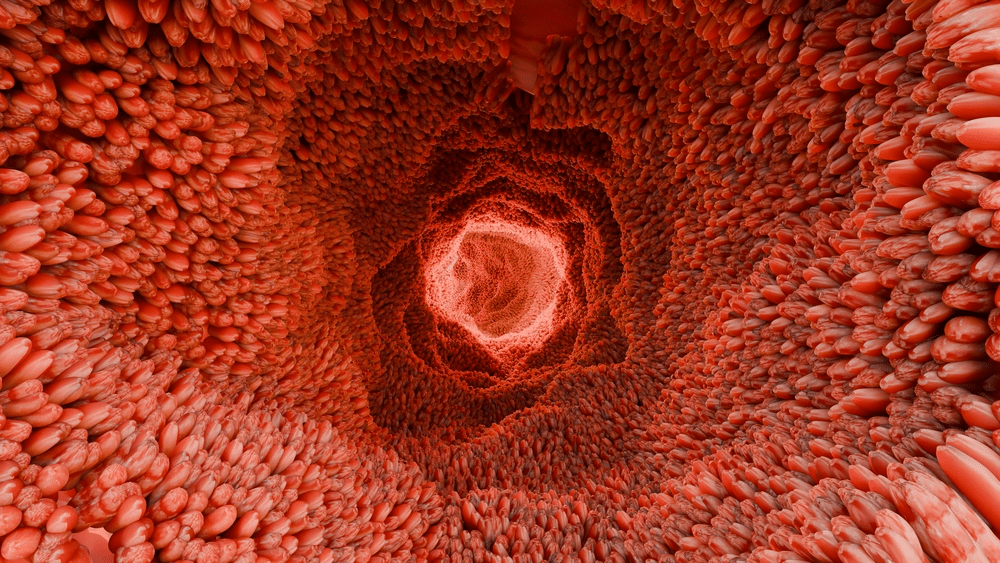
Why does this matter?
Because nutrient absorption only occurs when substances like vitamins, minerals, amino acids and glucose physically interact with the intestinal lining. So, the more surface area available, the more opportunities the body has to absorb what it needs to function.
This anatomical design allows the intestines to:
- Maximize contact between nutrients and absorptive cells
- Slow the movement of digested food for more efficient uptake
- Support consistent delivery of energy and building blocks to the body
#2 Different Regions Perform Different Jobs
Not all parts of the intestines perform the same job (which makes sense when you consider there are roughly 15 to 20 feet of intestinal anatomy to work with). Instead, each region is anatomically specialized to carry out specific tasks:
- The duodenum mixes digestive enzymes and bile with food.
- The jejunum handles the bulk of nutrient absorption.
- The ileum absorbs vitamin B12 and bile salts.
- The large intestine focuses on water absorption and waste formation.
From a clinical perspective, these structural differences matter. Damage to one region can cause very specific deficiencies or symptoms depending on which anatomical functions are disrupted. For example, impairment of the ileum can interfere with vitamin B12 absorption, even when overall digestion appears normal.
#3 Intestinal Length Influences Energy Balance
The length of the intestine isn’t accidental. It directly affects how long food remains in contact with absorptive surfaces.
A longer intestinal tract generally allows for:
- Greater nutrient extraction
- Slower transit time
- More opportunities for absorption
On the other hand, shortened or surgically altered intestines, such as after bowel resection, can lead to malabsorption and energy deficits, even with adequate calorie intake.
Your intestinal length plays a crucial role in your body’s ability to:
- Metabolize food
- Regulate body weight
- Maintain overall energy levels
#4 The Intestinal Barrier Protects Immune Health
Your intestinal lining may be the main site for nutrient absorption, but it has another critical job: deciding what’s allowed into the body and what stays out.
The intestinal wall is made up of tightly joined epithelial cells that form a physical barrier between the contents of your gut and the rest of your body. Think of this lining less like an open door and more like a security checkpoint. Nutrients are waved through. Potentially harmful substances are stopped before they cross.
This barrier doesn’t work alone. Immune cells are embedded throughout the gut wall, standing guard just beyond the lining. Under normal conditions, they remain relatively quiet because the barrier limits what they’re exposed to.
But if the intestinal anatomy is compromised due to injury, inflammation or increased permeability, substances that normally wouldn’t make it past the intestinal wall can slip through. When that happens, immune cells interpret these unfamiliar substances as potential threats.
In response, the immune system may:
- Release inflammatory signals
- Activate immune cells designed to neutralize invaders
- Increase local immune activity in the gut wall
While this response is designed to protect the body, it can also create inflammation that extends beyond the digestive tract. In this way, intestinal anatomy helps determine what the immune system notices and how strongly it should respond, shaping immune activity throughout the body.
Explore Intestinal Physiology at a Deeper Level
From nutrient absorption to immune signaling, the physiology of the intestines influences systems throughout the body. Understanding that design helps explain why digestive health is rarely “just about digestion.”
Want to know how anatomical structures translate into real-world health outcomes? Advanced training in physiology can help bridge that gap.
The University of Florida’s online graduate programs in medical sciences are designed for professionals who want a strong foundation in human systems without putting their careers on pause. These programs explore how anatomy, cellular processes and organ systems work together in health and disease. With a graduate credential in hand, you’ll be prepared for a career in healthcare, research, education and beyond.
Ready to take a closer look at human anatomy? Learn more about UF’s online medical sciences graduate programs and see how a deeper understanding of human anatomy can open new professional doors.