



How Biotech Is Powering the Future of Neural Prosthetics
Think of the word prosthetic. You might picture an artificial limb. Now imagine one that connects directly to the nervous system, restoring movement, sight or sound in ways traditional prosthetics never could. Some are so advanced that amputees simply think of an action and the neuroprosthetic completes it.
What’s driving these breakthroughs? Biotechnology, the field that blends biology, engineering and technology. With the help of dedicated researchers, scientists are developing devices that help people see, hear or move again after injuries or illnesses.
Curious about the future of medicine? Neural prosthetics show how biotech research is already changing lives and opening doors for tomorrow’s innovators.
What Are Neural Prosthetics?
Neural prosthetics (also called neuroprosthetics) are implanted devices that interact with the brain, spinal cord or peripheral nerves to restore function. Unlike traditional prosthetics, which typically work through mechanical movement or external controls, neuroprosthetics tap into electrical signals from the body to deliver more natural control and feedback.
Think about a simple task you do every day, like picking up a cup. Normally, your brain sends a signal to your hand and arm, and your body instinctively reacts. Boom — you’re holding the cup.
With a brain-computer interface (BCI) device, your brain sends the signal to the device, and the prosthetic responds almost as if it’s part of your body. It moves intuitively and can even provide sensory feedback, like the ability to feel the weight or texture of the cup you’re picking up.
What Are Examples of Everyday Neural Prosthetics?
Some familiar neurological prosthetics include:
- Cochlear implants, which help people with severe hearing loss by stimulating the auditory nerve
- Retinal implants, which provide partial vision to those with certain types of blindness
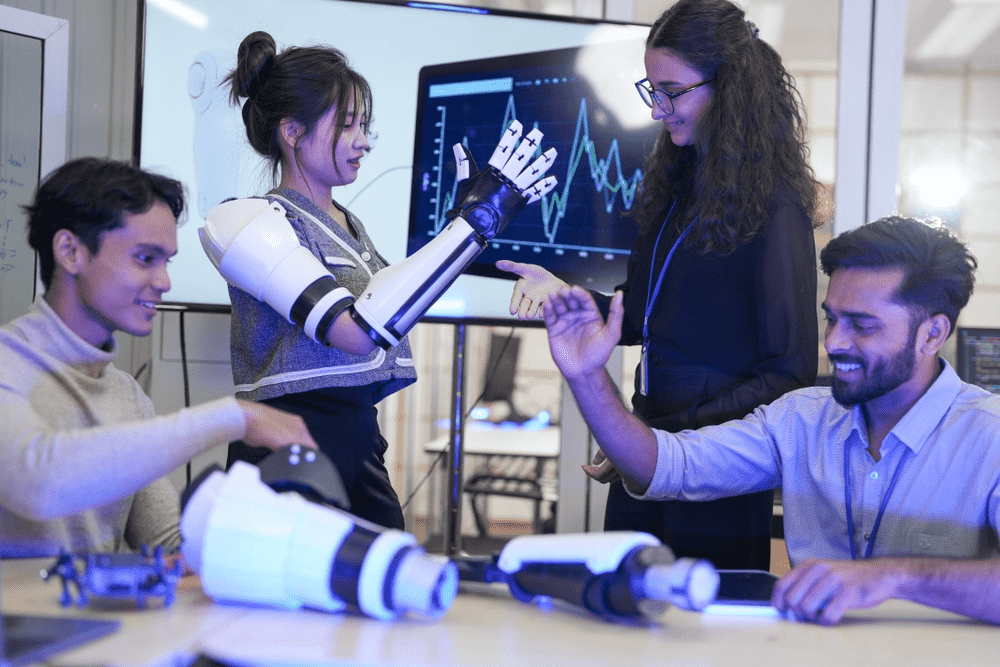
- Advanced prosthetic limbs with neuroprosthetic bypass systems, which respond to thought and provide sensory feedback
These technologies show what’s possible when technology works with the body’s natural systems, like nerves, muscles and sensory pathways.
How Is Biotechnology Advancing Neuroprosthetics?
Biotechnology research provides the materials and methods that make today’s neural prosthetics possible. Some recent innovations include:
- Biocompatible materials, like medical-grade silicone or titanium, that allow devices to be implanted in the body without causing harmful reactions
- Micro- and nanotechnology to create electrodes small enough to connect with delicate nerve tissue
- Machine learning and AI to interpret signals from the nervous system and translate them into movement
Each innovation helps neural prosthetic devices function more like natural body parts. For example, a prosthetic arm connected to nerves in the shoulder can translate a person’s intention, like reaching for a glass of water, into real movement.
Neural Prosthetics for Spinal Cord Injury: Restoring Motor Function
One of the most promising uses of neuroprosthetics involves spinal cord injuries. Damage to the spinal cord often interrupts signals between the brain and muscles, leaving parts of the body paralyzed.
Researchers are developing BCI devices that capture brain signals and translate them into commands for robotic limbs or electrical muscle stimulation, bypassing damaged nerve pathways with neuroprosthetic bypass systems.
Though these advances are still mostly limited to research settings, a 2023 study showed that patients can regain some control over movements like grasping objects, writing or assisted walking. By combining biotechnology and neuroscience, these systems help bridge the gap where natural nerve connections have been lost.
The Future of Biotechnology and Neurological Devices
Although some neural prosthetic technologies are still experimental, others have already begun changing lives. More than 700,000 people worldwide have received cochlear implants.
Advanced neurological prosthetics are moving from research labs into clinical use. Some formerly paraplegic patients are now learning to walk again. Others have regained fine motor control to perform everyday tasks like eating, writing or picking up objects.
And in the future? There are even more transformative devices on the horizon, such as:
- Closed-loop systems, where prosthetics not only receive signals from the brain but also send sensory information back
- Wearable exoskeletons that combine robotics and neuroprosthetics to help people walk again after paralysis
Each advancement points to a growing partnership between biotechnology and medicine.
Frequently Asked Questions About Neuroprosthetics and UF Programs
Curious about neurological prosthetics or how UF’s medical sciences programs can help you enter this field? Here are answers to some of the most common questions:
What are neuroprosthetics?
Neuroprosthetics are devices that work directly with the nervous system to restore sensory or motor function, such as advanced prosthetic limbs, cochlear implants or retinal implants.
How do neuroprosthetic devices work?
These devices read signals from the brain through brain-computer interface (BCI) devices and convert them into movements or sensory feedback. This helps users move, hear or even feel through artificial limbs or implants.
Can neuroprosthetics help people with spinal cord injuries?
Yes. Neuroprosthetic bypass systems and other BCI devices can bypass damaged nerves, helping some patients regain partial control of movement, grasp objects or perform daily tasks.
How do the University of Florida’s programs support a career in neuroprosthetics?
UF’s online master’s degree in medical anatomy and physiology and online Graduate Certificate in Medical Human Anatomy provide foundational knowledge in anatomy, physiology and the nervous system. These programs prepare students to contribute to neuroprosthetic research, biotech innovation and patient care.
Explore How You Can Make a Difference
Imagine being part of a team that helps hundreds of thousands of people regain movement. That impact? Priceless.
Ready to leave your mark on the future of neuroprosthetics? The journey is challenging, but the reward is unmatched.
At the University of Florida, programs like our online master’s degree in medical anatomy and physiology and online Graduate Certificate in Medical Human Anatomy give you the foundational knowledge to understand and shape these technologies.
Courses in anatomy, physiology and the peripheral nervous system don’t just teach theory; they prepare you to tackle practical challenges in your future career, from improving surgical techniques to advancing biotech research and patient care.
Be part of the next wave of medical innovation. Gain the skills to help people hear, see, move and regain independence through cutting-edge neuroprosthetic technologies.
Sources:
https://www.nature.com/articles/s41586-023-06094-5