






The Science Behind Headaches: What’s Really Happening In Your Skull
You know that pulsing, behind-the-eyes ache that hits after hours at your laptop or a day spent skipping water breaks? It feels like your brain is protesting — in a very loud, very annoying way.
But what’s really happening inside your head when pain strikes?
Think of your skull as a control center under pressure. Billions of nerve cells are constantly sending messages to different areas of your body to keep it running smoothly. The science behind headaches shows that pain begins when this communication network gets overloaded. When that happens, your nervous system sends out a distress signal that makes your entire head feel like it’s under siege.
In this article, we’ll explore:
- What happens in your brain when a headache starts
- The most common types and causes of headaches
- How science is helping us understand and treat them better
- Why understanding headaches matters for anyone studying the human body
What Causes Headaches? Understanding the Pain in Your Head
Contrary to what it seems like, your brain doesn’t actually feel pain. It has no pain receptors. Headache symptoms come from nearby structures, like:
- Blood vessels that supply the brain
- Nerves that transmit sensory information
- Thin membranes called meninges that wrap around your brain
When these areas sense stress, dehydration or changes in blood flow, they activate pain-sensitive nerves called nociceptors. These nerves send messages through the trigeminal nerve, a major neural pathway responsible for transmitting facial and cranial sensations.
Picture the trigeminal nerve as a central communication hub. When blood vessels swell or certain chemicals spike — like serotonin or calcitonin gene-related peptide (CGRP) — that hub starts transmitting distress signals at high speed.
The result? Throbbing pain, neck tension and a brain that feels like it’s running on overload.
The Most Common Culprits: 3 Types of Headaches
Not all headaches are created equal. Each type involves different mechanisms inside the brain and body, which is why they make us feel — and respond to treatment — so differently.
Here’s how the main types differ:
#1 Tension Headaches
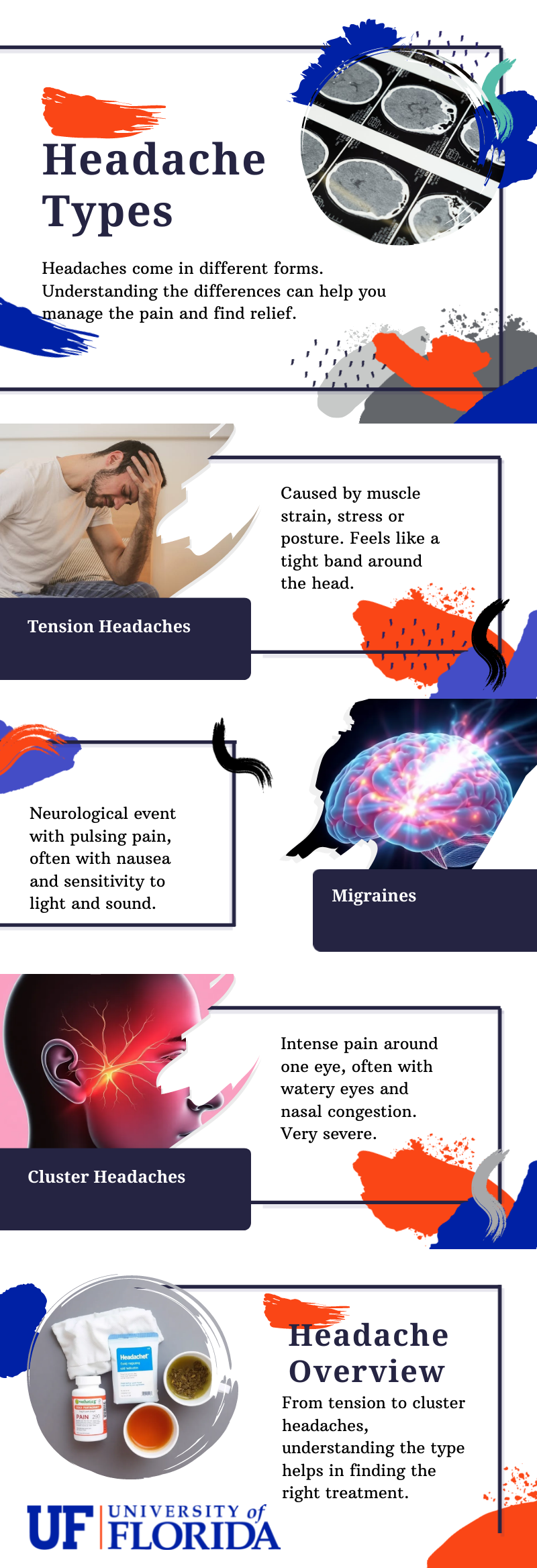
This is the “everyday” headache, and it might be the one you experience most often. Tension headaches are caused by muscle strain, stress or poor posture, which tighten muscles in the neck and scalp. That tension irritates surrounding nerves and restricts blood flow, creating a dull, steady ache.
What Does a Tension Headache Feel Like?
Most people describe it as a tight band around the forehead or a pressure that starts at the back of the head and creeps forward. It’s usually mild to moderate and doesn’t worsen with movement, but it can linger for hours.
#2 Migraines
A migraine isn’t just a bad headache; it’s a neurological event involving nerve signaling, inflammation and changes in blood vessel activity. A variety of triggers can set off a cascade of chemical changes in the brain, like:
- Hormonal fluctuations
- Certain foods
- Sleep deprivation
- Stress
During a migraine, blood vessels dilate and pain pathways become hyperactive, especially through the trigeminal nerve. Many people also experience an aura, which can include visual disturbances or tingling sensations before the pain starts.
What Does a Migraine Feel Like?
A migraine usually brings deep, pulsing pain, often on one side of the head. It’s often accompanied by light and sound sensitivity, nausea or vomiting. Some describe it as “a storm inside the skull,” where every sound or flicker of light feels amplified.
#3 Cluster Headaches
Rare but intense, cluster headaches are among the most severe types of head pain. They occur in cyclical patterns, or “clusters,” and typically cause excruciating pain behind or around one eye.
So, what causes cluster headaches?
Researchers believe they’re tied to the hypothalamus, the brain’s internal clock that regulates sleep, hormones and body temperature. During a cluster period, the hypothalamus may trigger abnormal nerve activity.
What Does a Cluster Headache Feel Like?
In addition to discomfort in one area of the face, patients can also experience other uncomfortable symptoms, like watery eyes, nasal congestion and drooping eyelids.
The Science Behind Headache Pain
If you look deeper into what’s happening inside the skull, headaches are the result of physical pressure and the brain’s perception of that pressure. When your brain’s blood vessels widen (vasodilation), they can press against nearby nerves and surrounding tissues.
Those nerves send pain signals to the brain stem, which acts as a translator between the body and brain. Once activated, the brain stem can stimulate other regions involved in balance, vision and digestion. This is why migraines often come with dizziness, nausea or blurred vision; the pain response spreads beyond one system.
The brain works like a feedback loop: The more these pain pathways fire, the more inflammation builds. This cycle amplifies the brain’s sensitivity to pain over time.
For this reason, many migraine treatments target calcitonin gene-related peptide (CGRP), one of the key chemical messengers involved in headache signaling. By blocking it, scientists can help break the loop — and the pain that comes with it.
Headache Research: What Scientists Are Learning About Pain
Headaches may be universal, but the science behind them is anything but simple. Researchers are studying how pain signals move through the brain, how genetics influence migraine risk and how environmental triggers — like bright lights or certain foods — affect blood vessel activity.
Some studies explore the link between gut health and migraines, uncovering how bacteria in your digestive system might influence inflammation and brain chemistry. Others look at brain imaging, mapping the exact regions that “light up” during headache episodes. Each study brings scientists one step closer to understanding not just how headaches happen but why.
Rapid-Fire FAQs on Headaches
We’ve unpacked the biology behind headaches and what sets each type apart. Here’s a quick, research-based recap of the headache-related questions people ask most often:
What causes headaches?
Headaches can stem from dozens of triggers: stress, dehydration, caffeine withdrawal, hormonal changes or even skipping meals. The brain’s pain-sensitive nerves respond to any disruption in the body’s equilibrium.
Are headaches and migraines the same thing?
Not quite. Migraines are a type of neurological headache that can cause intense pain, sensitivity to light and nausea. They involve changes in brain chemistry and blood flow, making them more complex than a standard tension headache.
Why do some people get headaches every day?
Chronic headaches can be linked to overuse of pain medication, ongoing stress or underlying conditions like sleep apnea or high blood pressure. Regular headaches should always be discussed with a healthcare professional, especially if they change in frequency or intensity.
Can studying the science behind headaches help prevent them?
Absolutely. Understanding the biology behind headaches helps scientists design better medications, therapies and even lifestyle recommendations. It’s one of many examples of how medical science translates into real-world impact.
Come Curious, Leave Qualified
If you’ve ever wondered why your body reacts the way it does, or how the brain and body stay in constant conversation, you’re already thinking like a scientist.
Programs like the University of Florida’s online graduate programs in medical sciences help students explore those exact questions. Courses in physiology, anatomy or pharmacology give you the tools to understand how something as common as a headache connects to bigger systems of human health.
The more we understand what’s happening in our skulls, the better we can care for our brains. Explore our entirely online program offerings to decide which might be the best fit for you.