




Graduate Certificate in Medical Physiology
This 9–14 credit certificate builds a strong foundation across major organ systems so you’re more prepared for the MCAT — or your next career move.
- Availability:
- Spring, Summer, and Fall
- Credits:
- 9-14 credits
- Tuition:
- $4,950.00-$7,770.00
- Location:
- Online
Boost Your Medical School Readiness in Just One Semester
Your future in medicine starts with a strong foundation, and that’s exactly what you’ll build here. The online Graduate Certificate in Medical Physiology gives you the science skills and expertise to take your next big step, whether that’s med school, PA school or a career in research.
Earn your credential in as little as one semester from wherever you are. With flexible, entirely online courses taught by UF’s expert faculty, you’ll strengthen your understanding of the human body (and gain a competitive edge on application day).
Want to see if this certificate fits your goals? Chat with a specialist whenever you’re ready.
The Next Step in Your Career
Think of this certificate as a bridge between where you are and where you want to go. It’s a clear, focused way to prove you’re ready for the next level of healthcare roles.
You’ll take six graduate-level courses, including:
- One required course: Fundamentals of Medical Physiology
- Five electives: Choose the topics that align with your goals
Choose your path:
- 9 credits: Finish in one semester
- 14 credits: Go deeper into human physiology
Quick Facts:
- 6 total courses
- 9 to 14 credits total
- Finish in 1 to 2 semesters
- 100% online
- No GRE required
Explore the Science That Powers Every Healthcare Field
Every great healthcare career starts with understanding how the body works.
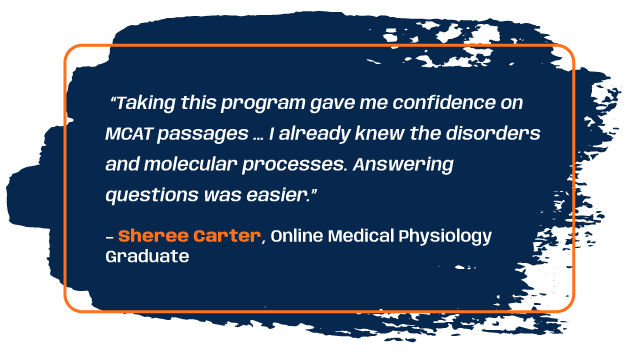
In this online program, you’ll connect advanced physiology concepts to real-world medicine. Build the kind of knowledge that helps you move beyond memorization to think critically. From cell biology to organ systems, you’ll see how everything fits together and how that foundation fuels success in any medical field.
By the time you’re done, you won’t just know physiology — you’ll understand it. And that understanding is what sets you apart from other applicants when you’re applying to PA or medical school.
Who Is This Program For?
This graduate certificate can benefit:
- Medical professionals, such as nurses and physician assistants
- Students preparing for the MCAT or other standardized tests
- Medical school applicants
- Nursing school applicants
- Physician assistant school applicants
- High school biology teachers or community college professors
- Biomedical professionals
- Medical technology professionals